
CASE STUDY · CLARIFALL
Make measurable improvements to complaint management — instead of relying on intuition.
ClariFall CME Diagnostics assesses complaint management maturity using an established nine-dimension framework and systematically highlights opportunities for improvement.
Explore the solutionEveryone knew improvements were needed but no one could show where
Internal assessments, scattered case data and isolated improvement initiatives did not provide an objective overall picture. It was unclear whether the weaknesses lay in intake, processing, analysis or performance monitoring. Initiatives therefore competed on the basis of opinions rather than a robust diagnosis.
Without a reliable baseline, it is difficult to prioritise improvements.
If it is not clear where the greatest weaknesses lie, investments are difficult to justify and subsequent improvements cannot be demonstrated reliably. According to the document, this is the underlying challenge for credibility and prioritisation.

Nine dimensions instead of a single overall opinion.
ClariFall CME Diagnostics assesses complaint management across nine dimensions: complaint management philosophy, complaint encouragement, intake, processing, response, analysis, performance monitoring, culture and human resource management. Crucially, the framework is externally established and grounded in academic research.
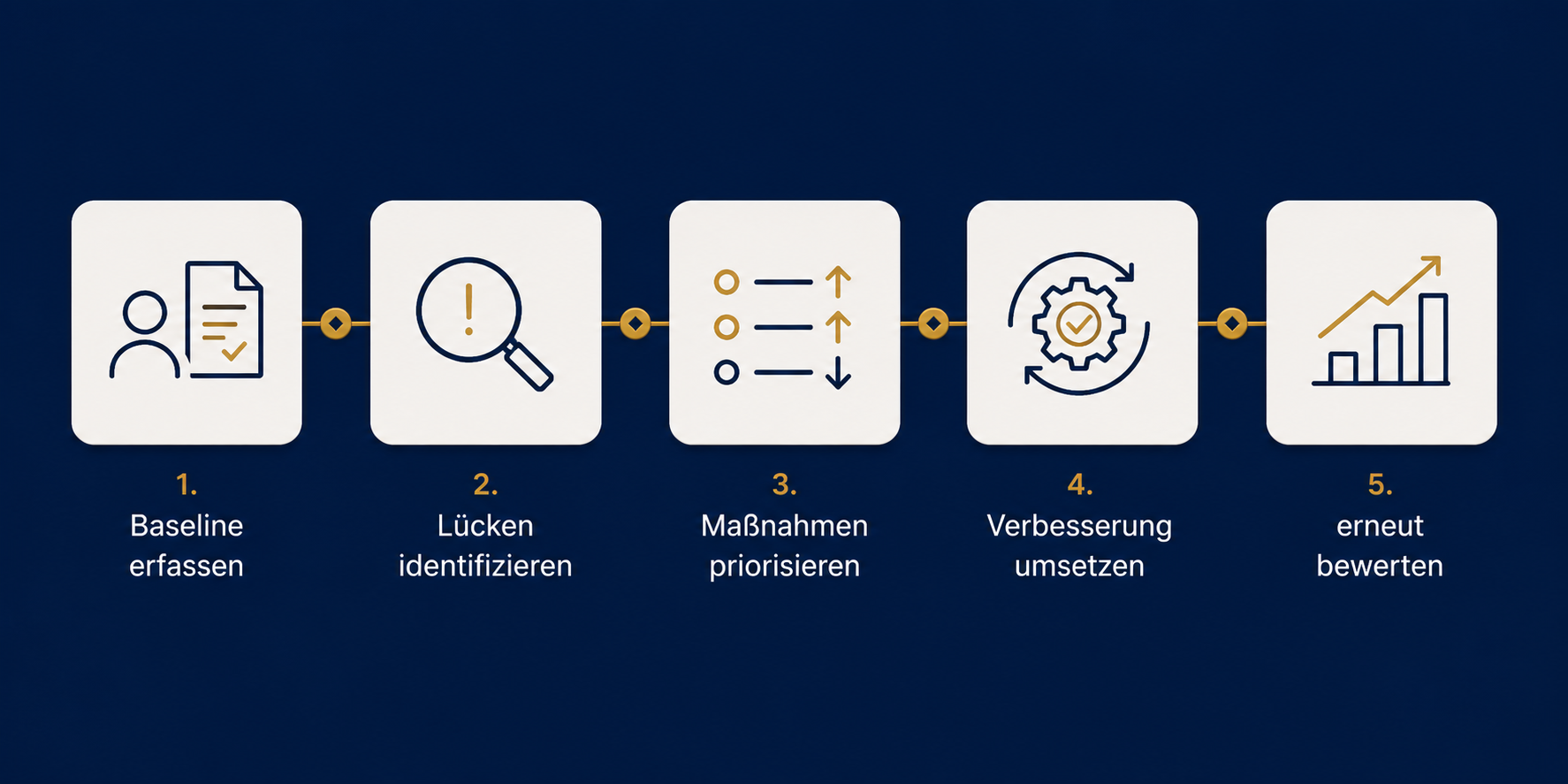
From a baseline to a targeted roadmap
1. Establish the baseline
2. Identify gaps
3. Prioritise actions
4. Implement improvements
5. Reassess
Software improves processes. Leadership and culture remain a management responsibility.
Intake, processing, analysis and performance monitoring are areas that ClariFall can influence directly. Culture and human resource management, however, belong to the organisational context and cannot be changed by software alone. This clear distinction is what makes the approach credible.
Improvement becomes a manageable process
An objective baseline, identified weaknesses, a prioritised roadmap, repeatable measurement, a better basis for management decisions, and a realistic distinction between software and organisational issues. These benefits follow directly from the functions and advantages described.