CASE STUDY · CLARIFALL

When complaint volumes rise, quality must not fall.

How ClariFall helps an energy supplier handle complaint peaks with automatic prioritisation, deadline monitoring and existing team capacity.

Explore the solution

Industry

Energy supply

Topic

Complaint management under peak load

Key stakeholders

Customer Service Operations / HR

Solution

ClariFall Complaint

When volumes rise, prioritisation must remain reliable. How do you keep sight of the truly critical cases?

A sharp increase in complaint volumes pushed the existing processing approach to its limits. Cases were largely handled in order of arrival, regardless of how close a statutory deadline was. Routine requests and deadline-critical cases ended up in the same queue, while growing backlogs made it harder to maintain an overview. There was no systematic process for identifying risks early and automatically adapting the order of processing.

A wave of complaints meets limited team capacity.

When intake fluctuates sharply, handling cases in order of arrival is no longer sufficient. Critical cases may wait among routine requests, while additional manual work builds up.
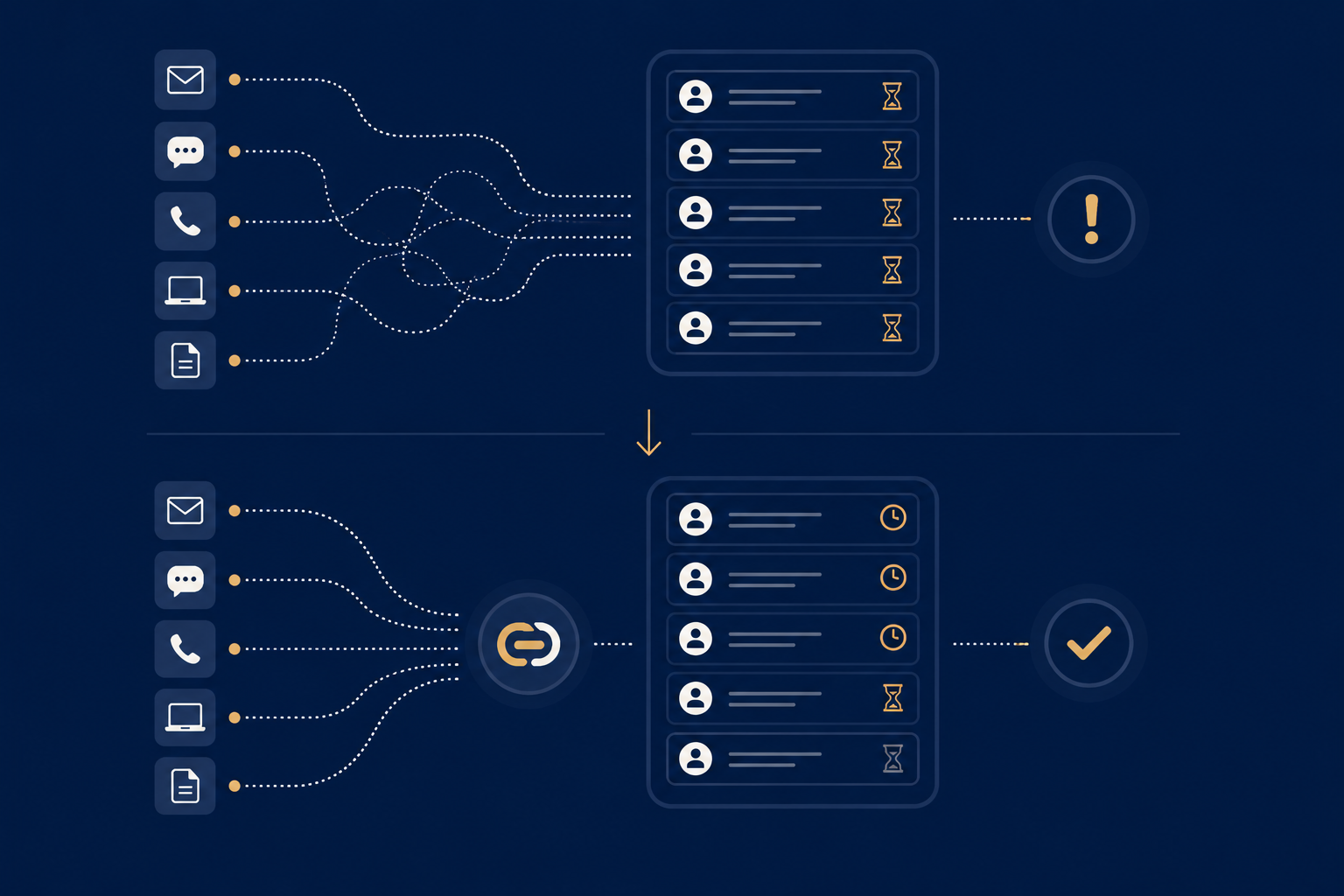
  • Cases are processed by arrival time rather than risk

  • Deadline-critical cases remain unnoticed for too long

  • Peak loads create additional manual work

Smarter coordination rather than more staff.

The previous approach responded to peaks mainly through overtime and short-term support. ClariFall instead focuses on intake management and the order in which cases are handled.

ClariFall turns complaint volumes into a manageable queue.

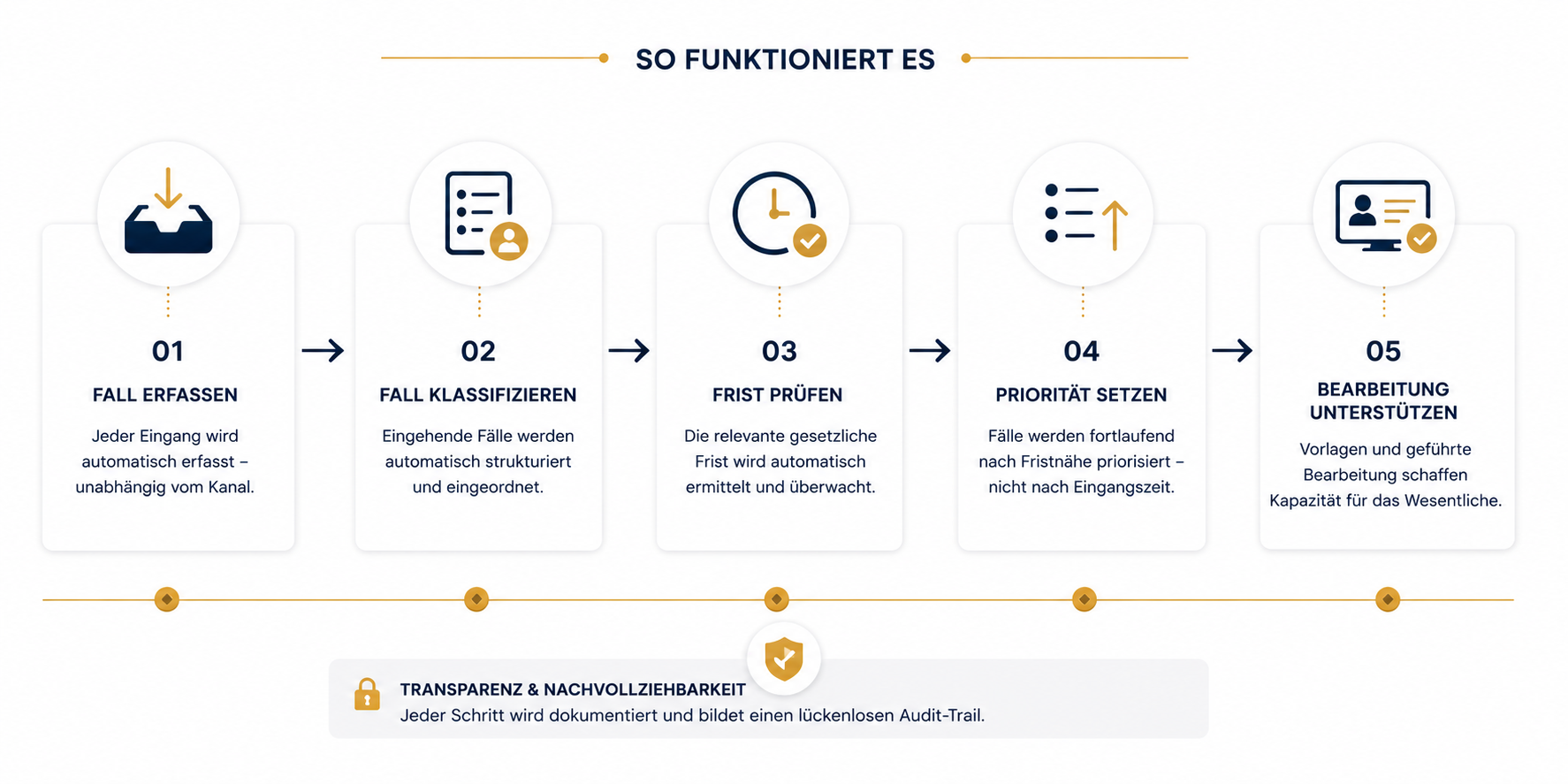
Every case is automatically captured and classified on arrival. The processing order is then prioritised according to how close each deadline is. Even the largest peaks become an ordered priority list.
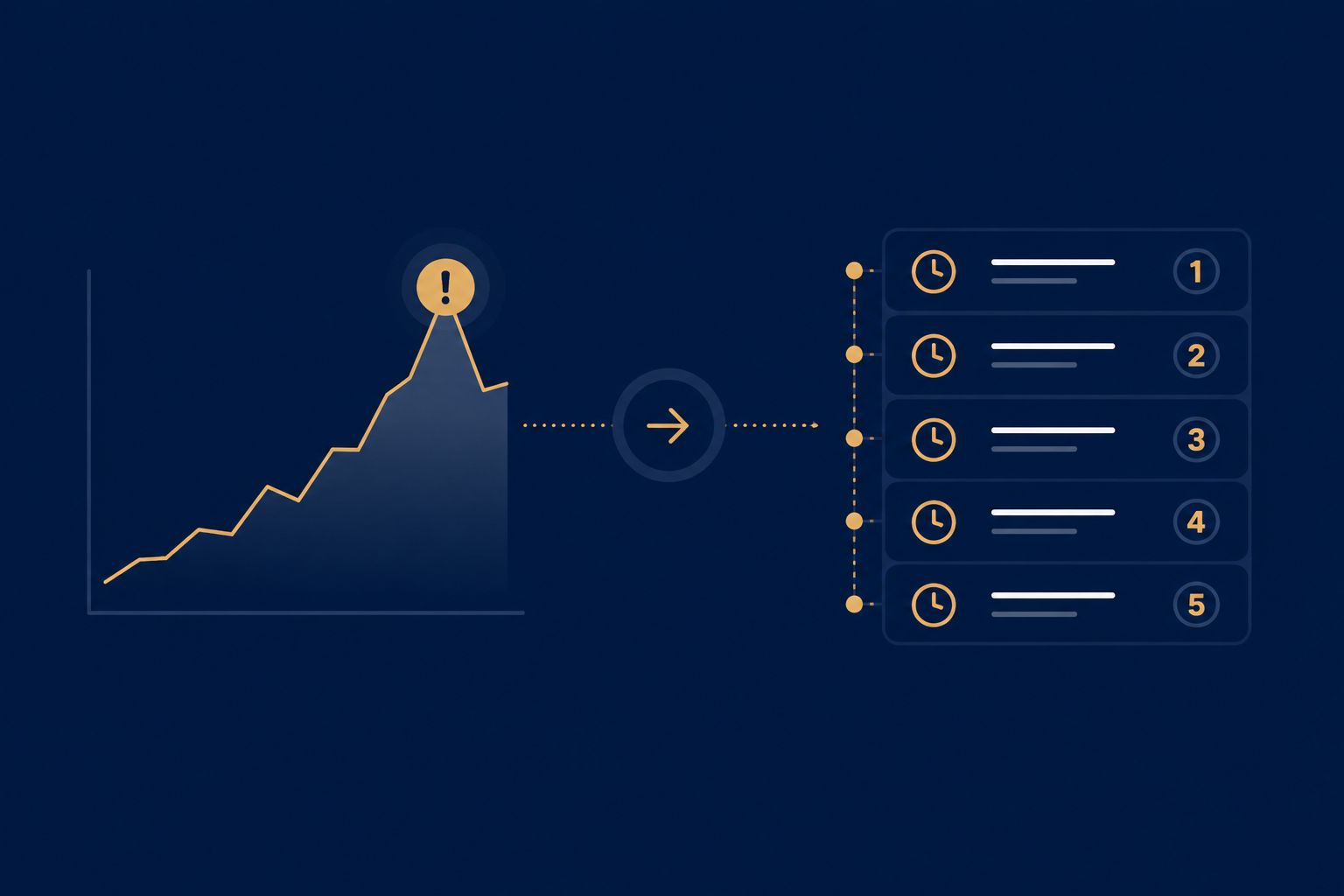
From FIFO to risk-based prioritisation.

Without ClariFall

Cases are largely processed in order of arrival. Routine requests and deadline-critical cases enter the same queue and are initially treated equally. As volumes rise, the backlog grows, and cases with tight statutory deadlines may wait among less urgent requests. The team must identify particularly critical cases itself and manage prioritisation manually.

With ClariFall

ClariFall continuously assesses open cases according to how close their deadlines are and reorders the queue accordingly. Cases at the greatest risk of missing a deadline are automatically moved to the top and remain visible even as volumes rise sharply. The team can therefore focus first on the most time-critical cases, while routine cases are processed afterwards in a structured way.

Peak loads become easier to plan for

ClariFall helps the existing team work in a structured way even when intake rises sharply, identify deadline risks early and avoid the need for additional manual capacity.

Keep deadlines in view:

Statutory deadlines are monitored automatically so that critical cases become visible in time.

Risk-based prioritisation:

Cases are prioritised according to deadline proximity, rather than simply when they arrive.

Scalable intake:

Even at high request volumes, cases are captured automatically and processed in a structured way.

Less manual effort:

Automated classification and template-assisted processing reduce the workload on the team.

Transparent capacity:

Managers gain early visibility of current queues and at-risk cases.

Traceable processing:

An immutable audit trail provides a complete record of how each case is handled.

See how a complex issue becomes a clearly managed case.

Discover ClariFall